
Powers Environmental provides EPA and NJ DCA certified lead paint inspections in NJ for landlords, property managers, and real estate investors. With over 25 years of experience, our independent, certified lead inspectors deliver visual assessments, dust-wipe sampling, and XRF testing across New Jersey, issuing compliance-ready Lead-Safe and Lead-Free certificates and handling your municipal filing from start to finish.
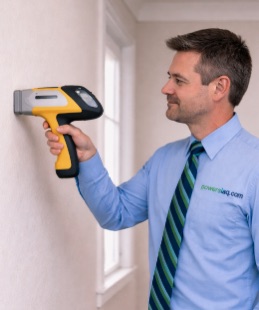

New Jersey’s Lead-Safe Certification Law — codified at N.J.A.C. 5:28A and enacted as P.L. 2021, c.182, effective July 22, 2022 — requires owners of pre-1978 rental properties to have their units inspected for lead-based paint hazards and to maintain a valid Lead-Safe Certificate. The law is administered by the New Jersey Department of Community Affairs (DCA), and the penalties for ignoring it are steep.
A lead paint inspection is mandatory if your property meets all of these conditions: it was built before 1978, it is a single-family, two-family, or multiple-dwelling rental unit, and it is located in New Jersey.
Covered properties were required to complete an initial inspection by July 22, 2024, or upon the first tenant turnover — whichever came first. After that initial inspection, two timelines run side by side, and this is where most landlords get confused:
3-year inspection cycle. This is the maximum gap allowed between inspections. You must re-inspect at least once every 36 months — even if the same tenant never moves out.
2-year certificate validity (for turnover). If a tenant moves out more than two years after your last inspection, the certificate is treated as expired and a new inspection is required before the next tenant moves in. If turnover happens within two years, your existing certificate still covers it.
| Scenario | Action required |
|---|---|
| Same tenant stays 3+ years | Inspect at the 3-year mark, regardless of occupancy. |
| Tenant leaves after 1 year | No new inspection needed. Your certificate is still valid for turnover. |
| Tenant leaves after 2.5 years | New inspection required before re-renting. The certificate has expired for turnover. |
After a violation is determined, owners have a 30-day cure period to address it. Owners who fail to comply after that window face fines of up to $1,000 per week, per unit. The state can also fine municipalities that fail to enforce these requirements, which is why many NJ towns are actively pushing landlords to certify.
Not every property is covered. The following are exempt from inspection under this law:
If you’re unsure whether your property qualifies for an exemption, our team can confirm your compliance
status quickly, before you pay for an inspection you may not need.
One point trips up almost every landlord: the schedule is the same statewide (every three years or at qualifying tenant turnover), but the method depends on your municipality. New Jersey assigns each town an inspection method based on local childhood lead-exposure data.
Powers Environmental confirms your municipality’s current required method before we schedule, so you’re never paying for the wrong inspection. If you received a notice from your town specifying a method, we follow it.
| Feature | Lead-Safe Certificate | Lead-Free Certificate |
|---|---|---|
| What it confirms | No active lead hazards at time of inspection | No lead-based paint present at all |
| Inspection method | Visual or dust-wipe sampling | XRF testing of all surfaces |
| Validity | Re-inspect every 3 years (or sooner on qualifying turnover) | Permanent |
| Recurring inspections | Yes | No |
| Best for | Properties that may contain lead paint but have no active hazards | Properties with no lead paint, or owners wanting to stop recurring inspections |
| Cost | Lower upfront | Higher upfront, lower long-term |
If you manage multiple rental properties, pursuing Lead-Free certification where possible can save significant time and money by eliminating recurring inspections altogether.
We make compliance straightforward, and because we’re an independent testing company, our findings are completely unbiased: we have no financial incentive to find, or not find, a hazard.
Under federal and state guidelines, any deteriorated paint on a pre-1978 structure is treated as a lead-based paint hazard until proven otherwise. Understanding what inspectors look for is the best way to prepare. These are the five disturbances that most often trigger a failure:
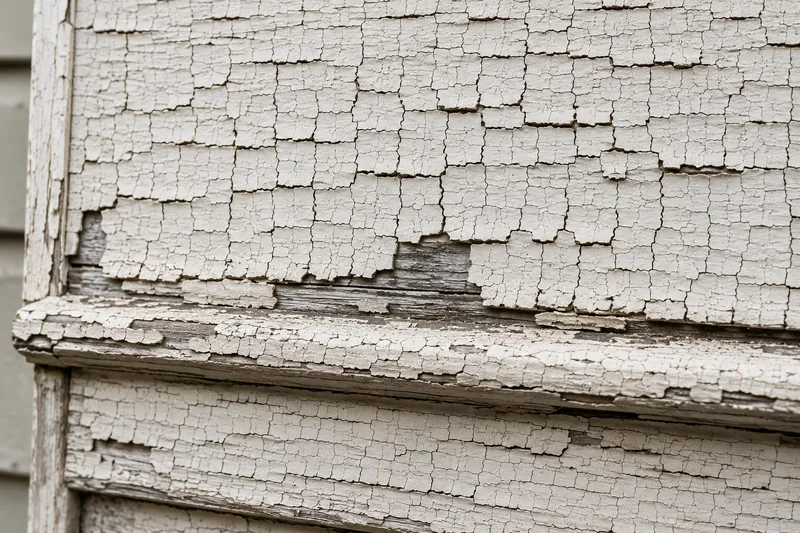
A pattern of small squares or scales resembling alligator skin, caused by brittle, aged paint or a hard coat over a soft one. It produces fine, lead-heavy dust and sharp flakes — common on exterior siding, heavy trim, and old windowsills.
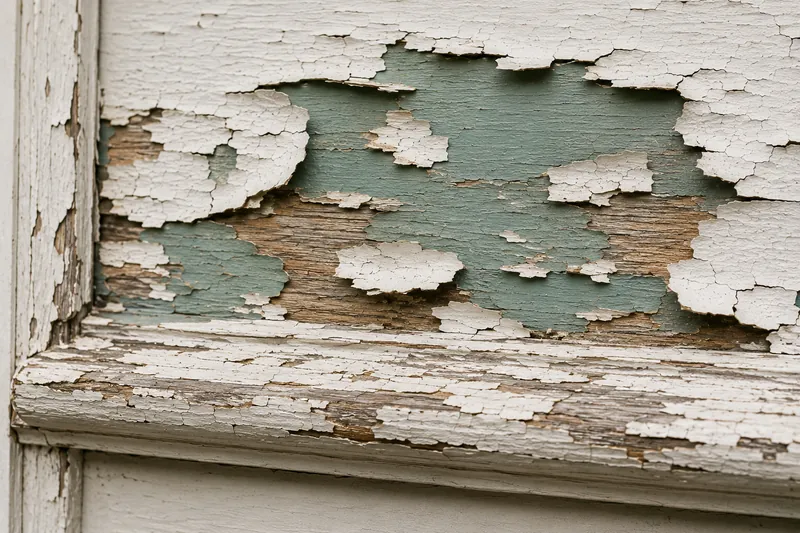
Paint separating from the surface or between layers, usually driven by moisture. Substrate failure leaves bare wood or masonry visible; intercoat failure reveals a different-colored layer underneath.
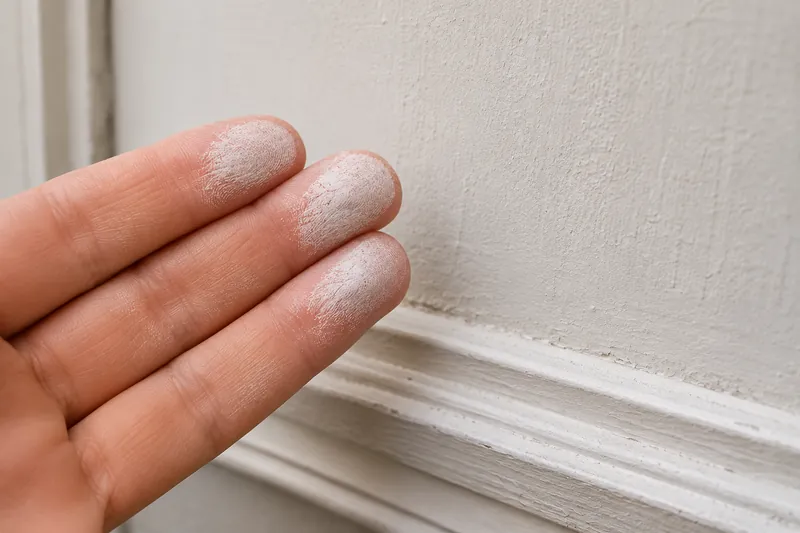
A fine powder that wipes off with a finger as the paint binder breaks down. Even paint that looks intact can fail here — a cloth swipe that picks up pigment is an automatic concern, because the dust is highly mobile and easily ingested by children.
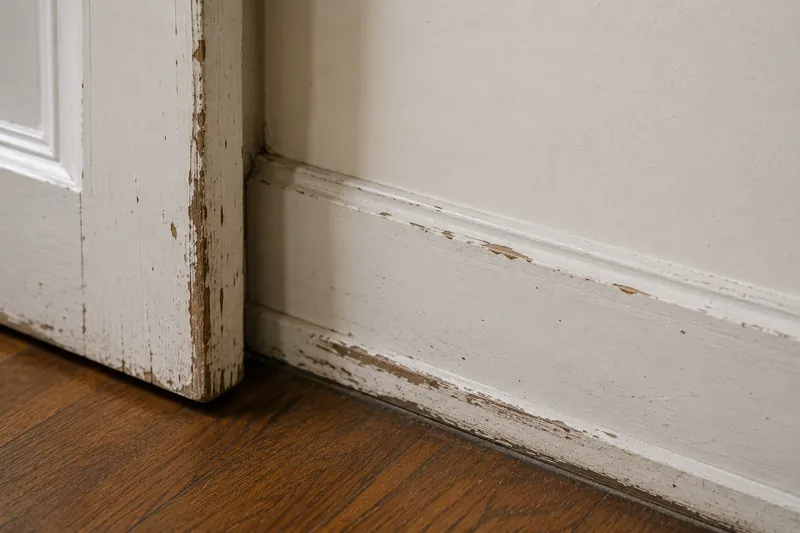
Window sashes, door edges, baseboards, and stair treads wear through mechanical action rather than age. Friction grinds out invisible lead dust; impact shatters brittle paint. These high-contact areas are scrutinized closely.
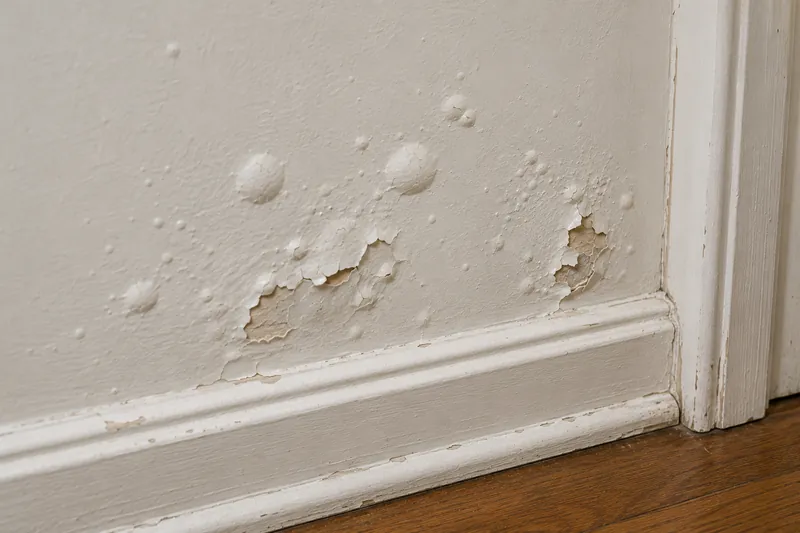
Bubbles where paint has lifted from trapped water or air. Once they burst, they leave jagged edges prone to further chipping.
How to prepare: repair or repaint deteriorated surfaces (using lead-safe work practices), give special attention to windows, doors, and trim, and clean dust from sills and floors before the visit. When deterioration is extensive, it’s worth addressing it properly before inspection rather than failing and paying for a re-inspection.
If a hazard is identified, the owner must take corrective action before a Lead-Safe Certificate can be
issued. There are two paths:
Interim controls are temporary measures that reduce exposure without fully removing the
lead paint: paint stabilization, replacing trim or components, or specialized cleaning. They must be
performed by trained workers and verified by clearance testing.
Abatement is the permanent removal, replacement, or enclosure of lead-based paint. It’s
more costly but eliminates the hazard, and it must be performed by NJ-certified lead abatement firms or
EPA-certified Renovation, Repair, and Painting (RRP) contractors.
Powers Environmental is an independent testing company. We do not perform remediation or
abatement. That means our reports carry no conflict of interest. After your chosen contractor
completes the work, we return to perform clearance testing, verify the unit is safe, and issue your
certificate.
Lead paint inspection cost in New Jersey varies based on a few factors:
We provide transparent pricing with no hidden fees and offer volume discounts for landlords with multiple
properties. Contact us for a free quote for your specific property.
Powers Environmental’s certified lead inspectors perform lead paint inspections across all of New Jersey, with additional service in Connecticut, New York, and Pennsylvania. We serve landlords and property managers in every NJ county, including:
Atlantic, Bergen, Burlington, Camden, Cape May, Cumberland, Essex, Gloucester, Hudson, Hunterdon, Mercer, Middlesex, Monmouth, Morris, Ocean, Passaic, Salem, Somerset, Sussex, Union, and Warren counties.
We’re familiar with the local requirements in every municipality — including the 51 NJ towns that require dust-wipe sampling — and we confirm your town’s method and filing process before we schedule.
It depends on property size, number of units, and inspection type (visual, dust-wipe, or XRF). A $20 state fee applies plus a local municipal fee that varies by town, and multi-unit owners usually qualify for discounts. Call (973) 834-8040 for a free quote.
Address any deteriorated paint — peeling, chipping, chalking, alligatoring, or blistering — and pay attention to high-contact friction and impact surfaces like windows, doors, and stair treads. A property generally fails when deteriorated paint exceeds 20 ft² outside, 2 ft² in any one room, or 10% of a small component like a windowsill.
Two timelines apply: you must re-inspect at least every three years, and separately, a tenant turnover more than two years after your last inspection requires a new inspection before re-renting. A permanent Lead-Free Certificate (earned via XRF) exits the cycle.
Lead-Safe confirms no active hazards (via visual or dust-wipe) and must be renewed by re-inspection. Lead-Free confirms no lead paint is present anywhere (via XRF) and is permanent.
Not all, but it's common — and the older the home, the more likely it contains lead paint, often in multiple layers. Only an inspection can confirm whether lead is present and hazardous.
At least every three years, or upon a tenant turnover occurring more than two years after the prior inspection. The initial inspection was due by July 22, 2024 or first turnover. Lead-Free properties are exempt from recurring inspections.
The state assigns each town a method based on childhood lead-exposure data: towns below a 3% elevated-blood-lead threshold may use visual assessments; those at or above it require dust-wipe sampling. Currently 51 NJ municipalities require dust-wipe sampling. We confirm your town's method before scheduling.
(877) 383-9814